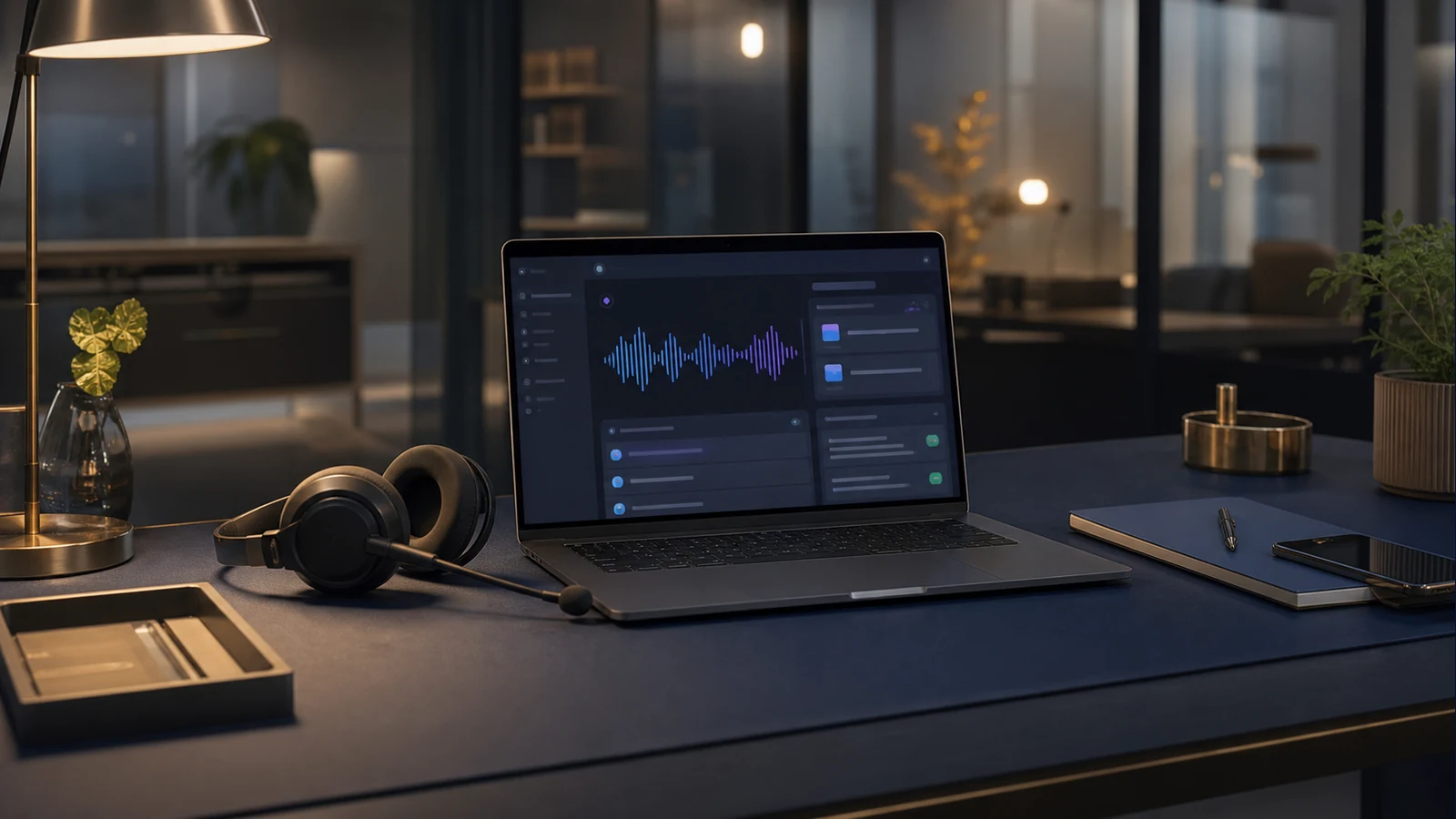
How an AI voice agent handles business calls, qualifies requests, supports SMB teams, connects to CRM and protects human escalation.
Short answer
An AI voice agent is useful when business calls follow repeatable patterns: identify the caller, understand the reason for the call, qualify the request, write a clean summary and hand off to the right person when needed. For VOCALIS, the goal is not to replace every conversation. The goal is to make sure every important call is captured, structured and connected to the next business action.
This guide targets the core English search intent behind AI voice assistant, voice agent AI, AI phone agent, enterprise voice agent, AI voice chatbot, AI voice agent solution and voice agent for SMBs. The wording is different, but the operational question is the same: can a company answer more calls without losing quality, context or control?
Where an AI phone agent creates value
The first value is call recovery. Many companies do not lose opportunities because they lack demand. They lose them because a call arrives during a meeting, after office hours, during a peak period or when the right person is unavailable. A well-scoped AI phone agent can answer, qualify and schedule a callback instead of letting the call disappear.
The second value is consistency. A human team may ask different questions depending on workload and mood. A controlled AI voice assistant follows the same qualification logic every time, captures the same fields and makes the next action easier to track inside the CRM.
- Inbound calls: identify intent, urgency and business context before routing.
- Lead qualification: ask the right questions before a sales callback.
- Appointment workflows: confirm availability, gather details and reduce no-shows.
- Customer support: handle simple level-one requests and escalate sensitive cases.
- After-hours coverage: keep a structured record when the team is offline.
AI voice chatbot vs enterprise voice agent
An AI voice chatbot is often imagined as a conversational front door: it can answer questions, collect information and guide the caller. An enterprise voice agent goes further. It needs permissions, escalation rules, CRM notes, compliance guardrails, reporting and a clear human takeover path.
That difference matters for SEO and for real deployment. A page that only says “voice AI answers calls” is too thin. A useful page explains what happens before the call, during the call and after the call: which data is allowed, which actions are automated, what is logged, when the call is transferred and how the team reviews performance.
What a voice agent for SMBs should do first
A voice agent for SMBs should start with narrow workflows. Small and mid-sized businesses usually need fast operational wins, not a complex transformation project. The best first workflow is frequent, measurable and easy to validate with the team.
| Workflow | Good first outcome | Human safeguard |
|---|---|---|
| Missed calls | Every caller gets a response and a callback path. | Urgent or unclear calls are flagged. |
| Lead qualification | The sales team receives cleaner context. | Low-confidence answers trigger review. |
| Appointments | Fewer back-and-forth calls. | Complex scheduling moves to a person. |
| Support level one | Simple requests are classified faster. | Complaints and sensitive topics transfer. |
How VOCALIS structures an AI voice agent solution
A VOCALIS-style AI voice agent solution should be designed around business rules, not around a demo script. The first step is to decide what the agent is allowed to answer, what it is allowed to collect, what it must never promise and when it must escalate.
The second step is the CRM summary. A call is only useful if the team can reuse it. The agent should produce a clean recap: caller identity, intent, key facts, urgency, proposed next step and any warning that requires human attention.
Internal links to strengthen the VOCALIS cluster
- Core page: best AI voice agent
- Conversion page: AI voice agent platform
- CRM workflow: AI voice agent CRM integration
- SMB workflow: voice agent for SMB missed calls
- Lead workflow: AI lead qualification by phone
Security, consent and human escalation
Voice automation touches identity, intent, sometimes personal data and occasionally sensitive situations. That is why an enterprise-ready approach must include scope control, logging, access rules, retention logic and a visible path back to a human team.
The practical rule is simple: the AI agent should not pretend to be a person, should not invent commitments and should not hide uncertainty. It should explain its role when appropriate, stay inside the approved workflow and transfer when the caller needs a human decision.
How to measure the project
The best metrics are operational. Track answered calls, qualified calls, callbacks created, CRM summaries delivered, human transfers, low-confidence conversations and caller satisfaction. These indicators show whether the voice agent is improving the business workflow instead of merely adding another tool.
For SEO, this page also acts as a hub. It links the broad English intent to more specific VOCALIS pages so search engines and AI answer engines can understand the relationship between AI voice agent, AI phone agent, voice chatbot, CRM integration and SMB call recovery.
Book a free 30-minute audit
Map the first voice workflow worth automating: missed calls, lead qualification, appointments, support or CRM recap.
Book my free audit